Stains happen. A splash of morning coffee on your work shirt, grass-stained knees on the kids' school uniforms, or a splash of red wine at a Saturday barbecue. The good news is that most stains are completely treatable if you know what you're doing and act quickly. After years of running a laundry service in South East Queensland, we've seen just about every stain imaginable. Here's what actually works.
Quick Answer
For most stains, act quickly: blot (never rub), rinse with cold water, and apply a mild detergent or white vinegar before washing.
The Golden Rules of Stain Removal
Before we get into specific stains, there's one rule that applies to almost everything:treat the stain as soon as possible. The longer a stain sits, the deeper it bonds with the fabric fibres. A fresh coffee spill takes two minutes to treat. A week-old coffee stain might be permanent. If you can't treat it straight away, at the very least blot (don't rub) the area with cold water and keep the garment separate from your regular washing pile.
Coffee and Tea Stains
What to Do Immediately
Rinse the stain under cold running water from the back of the fabric. This pushes the tannins out rather than deeper into the fibres. Blot gently with a clean cloth. Avoid hot water at this stage because heat sets tannin-based stains.
Home Treatment Steps
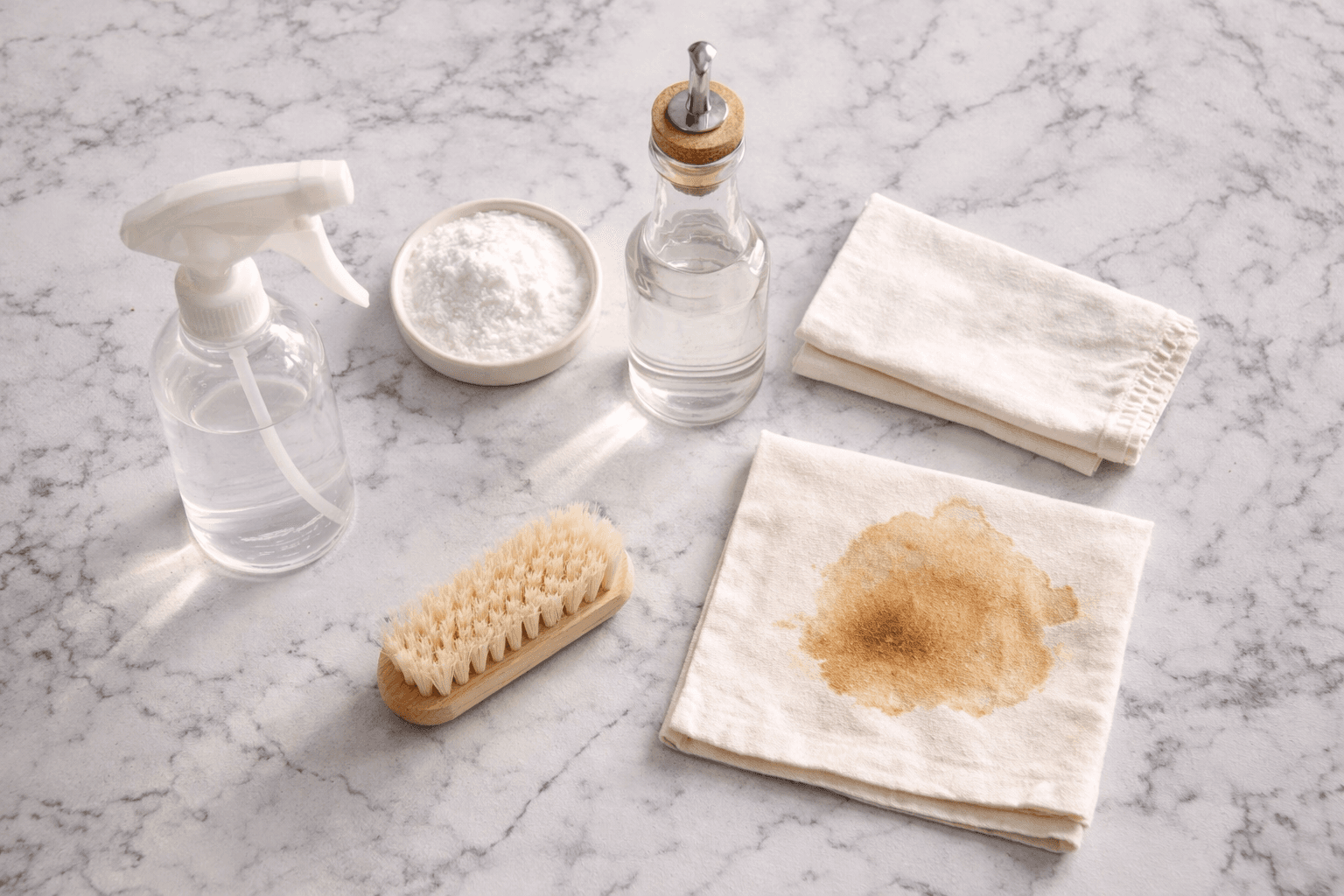
Mix one tablespoon of white vinegar, one tablespoon of dishwashing liquid, and two cups of cool water. Soak the stained area for 15 to 30 minutes. Then blot with a clean cloth and rinse. For stubborn marks, make a paste of baking soda and water, apply it to the stain, and leave it for 15 minutes before rinsing. Wash as normal in the machine on a cold cycle.
When to Call a Professional
If the stain has dried and set, or if the garment is silk or wool, home treatment can sometimes make things worse. Our wash and fold service includes stain pre-treatment, and we use commercial-grade products that are far more effective than supermarket sprays. Bring it in before you try bleach, which can damage the fabric permanently.
Red Wine Stains
What to Do Immediately
Blot the area with a dry cloth to absorb as much liquid as possible. Then pour salt generously over the stain. The salt draws the wine out of the fabric. Leave it for a few minutes, then brush the salt away and rinse with cold water.
Home Treatment Steps
The classic approach: mix equal parts dishwashing liquid and hydrogen peroxide (the 3% solution from the chemist). Apply it to the stain and leave for 20 minutes. You should see the colour start to fade. Rinse thoroughly and wash on a cold cycle. Another option that works surprisingly well is soaking the stain in white wine or club soda. The carbonation helps lift the pigment.
When to Call a Professional
Red wine on a white tablecloth or a formal dress shirt is stressful. If the garment matters to you, skip the home experiments. Professional treatment within 24 hours gives us the best chance of removing it completely. We handle delicate fabrics carefully through our delicates and special care service, so you don't have to worry about making it worse.
Grass Stains
What to Do Immediately
Parents of kids who play sport know this one well. Grass stains are a combination of chlorophyll, protein, and other organic compounds, which makes them surprisingly stubborn. Brush off any loose grass or mud first. Don't rub the stain because that grinds the pigment deeper into the fabric weave.
Home Treatment Steps
Soak the stained area in white vinegar for 30 minutes. Then apply a small amount of dishwashing liquid directly to the stain and work it in gently with an old toothbrush. Rinse and check the stain before putting it in the machine. If you can still see green, repeat the vinegar soak. Hot water will set the stain, so stick with cold throughout the entire process. For white school uniforms, an oxygen-based bleach (like Napisan) soak overnight can work wonders.
When to Call a Professional
If you've got a pile of grass-stained sports gear every week, it might be easier to just hand it over. We see a lot of this from families around New Beith and the surrounding areas. Our wash and fold includes targeted stain treatment, so everything comes back clean and ready to go for the next game.
Grease and Oil Stains
What to Do Immediately
Cooking oil, butter, mechanical grease, even sunscreen. The approach is the same: absorb as much as you can. Sprinkle cornstarch, talcum powder, or baking soda over the stain and press it gently into the fabric. Leave it for 10 to 15 minutes to absorb the oil, then brush it off.
Home Treatment Steps
Dishwashing liquid is your best friend here because it's designed to cut through grease. Apply a generous amount directly to the stain, work it in with your fingers, and leave it for 10 minutes. Rinse with warm water (grease responds better to warmth, unlike protein-based stains). Repeat if needed, then machine wash on the warmest setting the care label allows. Check the stain before putting the garment in the dryer because heat from the dryer will permanently set any remaining oil.
When to Call a Professional
Mechanical grease and motor oil can be particularly tough, especially on lighter fabrics. If the stain has been through a hot dryer cycle already, home treatment probably won't cut it. Professional-grade degreasers and our commercial equipment can often salvage garments that seem beyond hope.
Blood Stains
What to Do Immediately
Cold water only. This is the most important thing to remember with blood. Hot water cooks the proteins in blood and bonds them permanently to the fabric. Rinse under cold running water as soon as possible. Fresh blood stains come out remarkably easily with just cold water and a bit of soap.
Home Treatment Steps
For fresh stains, cold water and regular soap will usually do the job. For dried blood, soak the garment in cold salted water (two tablespoons of salt per litre) for several hours or overnight. Hydrogen peroxide also works well on white fabrics, but test it on an inconspicuous area first because it can bleach coloured fabrics. Another option is to make a paste with unseasoned meat tenderiser and cold water. The enzymes in the tenderiser break down the blood proteins. Apply, leave for 30 minutes, rinse, and wash.
When to Call a Professional
Dried blood on delicate fabrics like silk, wool, or anything with a "dry clean only" label should go straight to a professional. Aggressive home treatment on these fabrics often causes more damage than the stain itself. Our special care service handles these situations regularly.
Ink Stains
What to Do Immediately
Place a paper towel or clean rag behind the stain to catch any ink that bleeds through. Don't rub. Ballpoint ink and permanent marker require different approaches, so check what caused the stain before you start treating it.
Home Treatment Steps
For ballpoint ink, rubbing alcohol (isopropyl alcohol) is the most effective solvent. Apply it with a cotton ball, dabbing gently. You'll see the ink transfer to the cotton ball. Keep using fresh cotton balls until no more ink comes off. Then rinse and wash. Hand sanitiser works in a pinch because it contains alcohol. For permanent marker, try the same alcohol method, but be prepared for it to be a slower process. Hairspray used to work well for ink stains back in the day, but modern formulations have less alcohol, so it's less effective now.
When to Call a Professional
Large ink stains or ink on delicate fabrics should be treated professionally. Ink solvents can strip colour from some fabrics, so a test patch is essential. If you're not confident, hand it over before attempting anything that could spread the stain further.
Sweat and Deodorant Stains
What to Do Immediately
This is the one stain where you actually want to wait. Let the mud dry completely. Wet mud smears and pushes deeper into the fabric when you try to clean it. Once it's dry, brush off as much as possible with a stiff brush. You'll be surprised how much comes off at this stage.
Home Treatment Steps
After brushing off the dried mud, soak the garment in a solution of warm water and dishwashing liquid for 15 minutes. Work any remaining stain gently with an old toothbrush. For red clay mud (common in parts of South East Queensland), add white vinegar to your soak solution. The acidity helps break down the iron compounds that give red clay its colour. Machine wash on the appropriate setting and check before drying.
When to Call a Professional
Red clay can be a nightmare on light-coloured clothing. If home treatment has faded but not removed the stain, professional equipment and products can often finish the job. Bring it in sooner rather than later for the best result.
General Stain Tips
- Always check the care label first. Some fabrics need specific treatment, and the wrong approach can cause shrinkage, colour loss, or fabric damage.
- Test any treatment on a hidden area. The inside seam or hem is ideal. Wait a few minutes and check for discolouration before treating the visible stain.
- Never put a stained garment in the dryer. The heat from a tumble dryer will permanently set most stains. Always air dry and check the stain first.
- Blot, don't rub. Rubbing spreads the stain and can damage fabric fibres. Press gently with a clean cloth to absorb the substance.
- Work from the outside in. Treat the edges of the stain first and work towards the centre to prevent spreading.
When to Call in the Professionals
Some stains genuinely need professional attention. Old stains, stains that have been through the dryer, and stains on delicate or expensive garments are all best left to someone with the right equipment and experience. At Fresh Folds, stain treatment is built into our wash and fold service. We assess every garment, pre-treat stains with the appropriate product, and use commercial-grade machines that clean more effectively than domestic ones. If you are dealing with stains on delicate or special fabrics, our guide to caring for delicate fabrics covers what each material can handle.
If you've got a pile of stained clothes you've been putting off dealing with, or a favourite garment with a stubborn mark you can't shift, get in touch. We handle everything from everyday laundry to tricky stain removal. Request a free quote and let us take the stress out of laundry day.
People Also Ask
Reference Stack